
"What impresses me most about John Smelcer, aside from his powerful writing, is his indomitable spirit. He has never given up; he has never let others quiet his voice. He continues to write and the world continues to listen to what he has to say." -James Welch, American Book Award winning author of Fools Crow & The Indian Lawyer
"Smelcer's prose is lyrical, straightforward, and brilliant...authentic Native Alaskan storytelling at its best." -School Library Journal
"John Smelcer's poems bring one a strong sense of his Indian ancestry, his constant and haunting awareness of the indigenous life so grievously wounded yet still alive around and in him. As a pioneer in exploring the almost defunct Ahtna Athabaskan language for some of his own work, which he then translates into English, Smelcer is taking an active step towards rescuing it for his contemporaries. When he evokes the Alaskan landscape, its fauna, its myths, one can't help but feel one is hearing the voice of a late twentieth century individual poetic sensibility and the collective voice of the people of that landscape in times past. This gives his work an unusual and valuable resonance." -Denise Levertov, foreword to Songs from an Outcast
"The North, the winter, warmth within cold--this poet speaks from the land, and for the land and the people who belong to it." -Ursula K. LeGuin, backcover, Songs from an Outcast
"In a world where the media relentlessly enflames fear and hatred, here is a quiet voice espousing the triumph of love and peace." -Desmond Tutu, winner of the Nobel Peace Prize
"John Smelcer is Alaska Native . . . just one voice among millions of Native Americans. His is a well-honed voice, however. There's much to be gained from listening to him." -Anchorage Daily News
"John Smelcer is one of the truly great poets I have come across in my life. His poetry is of genius." -Ruth Stone, winner of the National Book Award
"It impresses me that John Smelcer is a very considerable American poet, an astute observer of our contemporary scene." X.J. Kennedy, editor of LITERATURE
"Allen Ginsberg named John Smelcer one of the most brilliant younger poets in America. Poetry as it should be, without a wasted word, with unparalled attention to sound and rhythm." W.P. Kinsella, author of Field of Dreams
Author, poet, professor, mythologist, linguist, cancer survivor, fitness advocate, philosopher, and public intellectual, John Smelcer was mentored by the legendary John Gardner (The Art of Fiction, On Becoming a Writer, On Moral Fiction), James Michener (Centennial, Texas, Alaska), W. P. Kinsella (Field of Dreams), and Joseph Campbell (The Power of Myth, The Hero With a Thousand Faces). John Smelcer is the award-winning author of more than sixty books, many translated into other languages. Few living American authors have written as many books. Aside from his many novels and poetry collections--including his most recent poetry books, Raven and Running from the Reaper--John Smelcer has published books in Native Studies, history, folklore and mythology, anthropology and archaeology, linguistics, as well as anthologies, plays, screenplays, dictionaries, religion/spirituality, including an inspirational pocketbook A New Day.
John Smelcer co-wrote several children's books with Ann McGovern, author of Stone Soup and one of America's most beloved children's authors since the 1960s. Click on "dictionaries" on the menu above to read/download John's bilingual children's picture book, Walk About: Life in an Ahtna Athabaskan Village (1998). His historical novels like Stealing Indians--about Indian Boarding Schools in the USA and Canada--honestly portray the Native American Experience in the United States. Stealing Indians is routinely taught in Native schools. Every year, Dr. Smelcer talks to classes about his books. John Smelcer's poems, short stories, essays, interviews, articles, and blogs--read by millions--appear in hundreds of magazines and journals worldwide. He has judged dozens of national and international literary awards, as far away as Israel and Australia.
Dr. Smelcer's education includes graduate studies in literature at Cambridge and Oxford. For over a decade, Dr. Smelcer studied world religions at Harvard University. In November of 2022, he earned a certificate in Diversity and Leadership from Harvard University (see photo below; Dr. Smelcer at far left). He also earned a Certificate of Advanced Graduate Study (CAGS) in Health Care Administration from Texas A&M University. Dr. Smelcer was manager of the department of Health Education at Southcentral Foundation, part of the Alaska Native Medical Center campus in Anchorage, Alaska. The campus, which serves over 80,000 Alaska Natives, is one of the world's premiere institutions for indigenous healthcare.
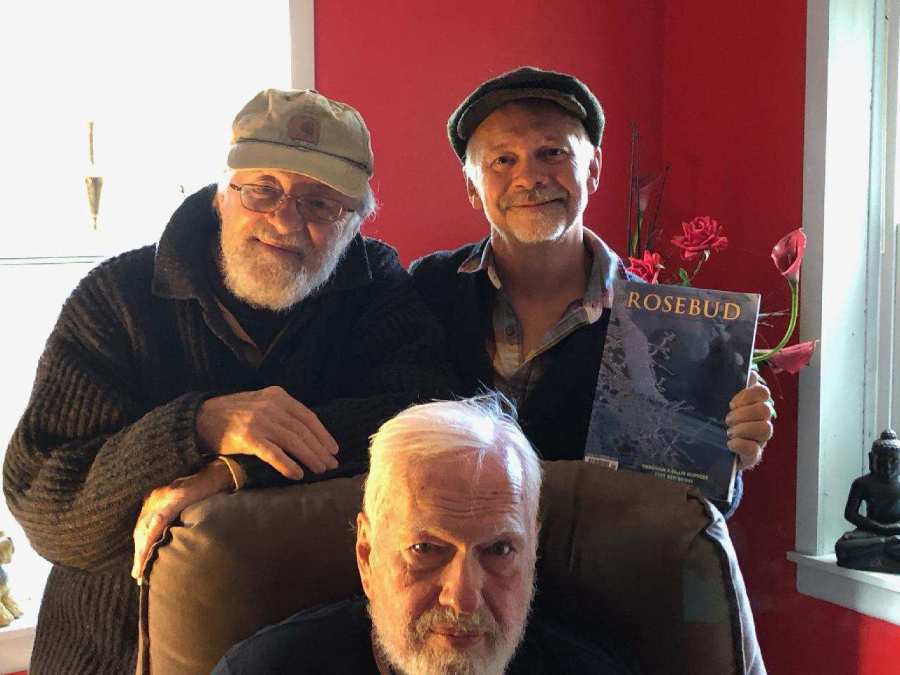
In the fall of 2017, Dr. Smelcer retired as poetry editor at Rosebud magazine, a post he held for nearly a quarter of a century. The Boston Globe once called Rosebud "the best literary quarterly in America." As poetry editor over three decades, John estimates he received and read some 250,000 poems. Over the years, John wore other hats at Rosebud, including serving as Publisher/CEO during the early 2000s. During which time, John led Rosebud through a period of reorganization that allowed the magazine's circulation to increase to over 10,000 copies distributed in the US, Canada, and the UK. Nowadays, as Rosebud's Senior Editor Emeritus, John Smelcer advises the magazine and continues to bring amazing literature to Rosebud readers. For instance, he recently tried to secure the rights to publish two previously unknown and unpublished short stories by John Steinbeck, and he successfully secured the rights to publish several poems by Ernest Hemingway. (I bet you didn't know Hemingway wrote poetry.)
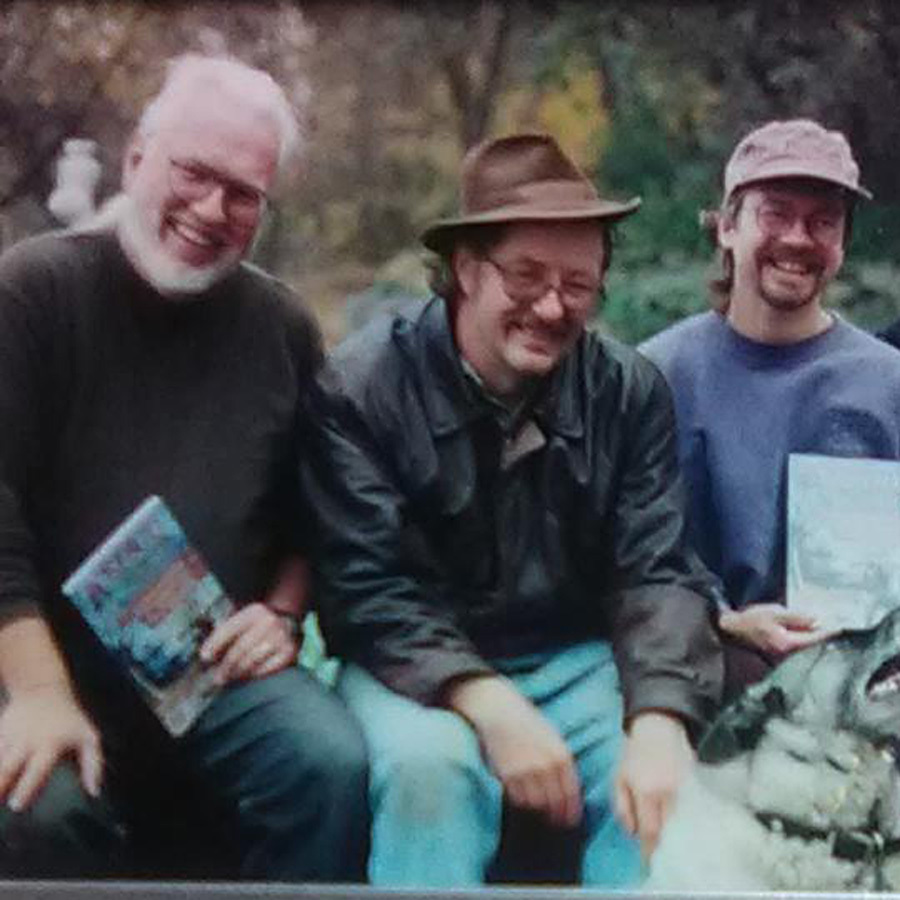
(Above photo: Rosebud magazine's longtime editors, left to right: John Lehman,
Rod Clark, and John Smelcer 1996. Below photo: 2020) Sadly, John Lehman passed away in June of 2021.

FINDING THOMAS MERTON
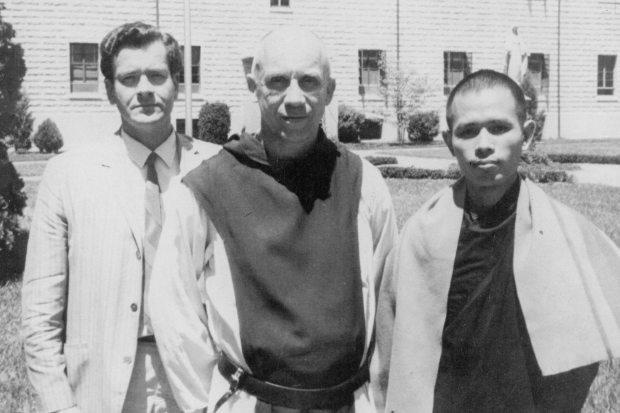
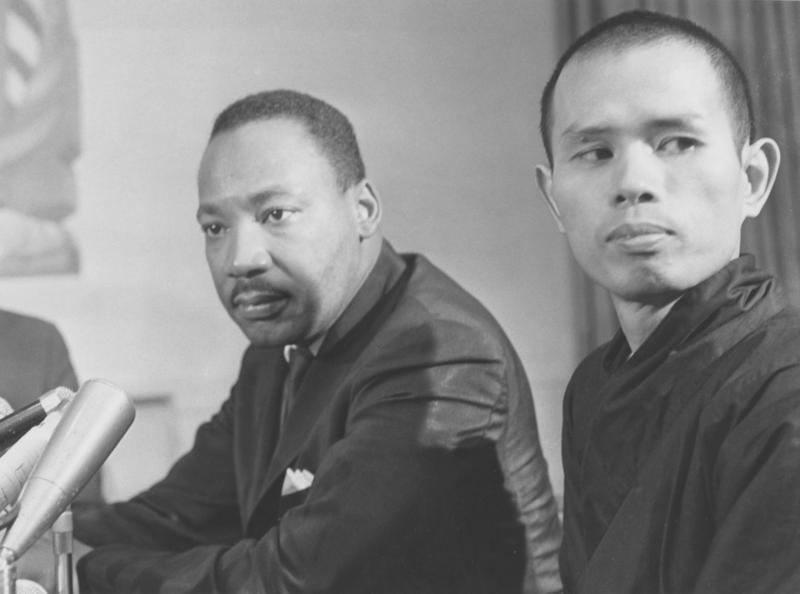
In the spring of 2015, John Smelcer “discovered” the worldly possessions of Thomas Merton, one of the most influential figures of the Twentieth Century. Writer, theologian, philosopher, poet, mystic, and social rights and peace activist, Merton was arguably the most famous monk in the world when he died on December 10, 1968. It has been said that Merton was the conscience of America, especially during the tumultuous 1960s. He was the author of seventy books, including his iconic The Seven Storey Mountain, widely considered one of the most inspiring coming-to-faith autobiographies in history, alongside St. Augustine’s Confessions, and listed as one of the best nonfiction books of the century. Two years later, Dr. Smelcer "discovered" a letter from the chair of the Pulitzer Prize Selection Committee to Columbia University naming Merton's poetry book, The Tears of the Blind Lions, as a finalist for the Pulitzer Prize in 1950 (Gwendolyn Brooks received the prize). For almost seventy years, no one had known of the honor, not Merton nor his publisher. Merton influenced the Civil Rights Movement, helping to inform Martin Luther King, Jr. on the nature of nonviolent protest. Both Merton and King have been hailed as "America's Prophets." With fellow priests, Daniel and Phillip Berrigan, and refugee Vietnamese Buddhist monk Thich Nhat Hanh, Merton was one of the most vocal critics of the war in Vietnam. It was Merton who convinced Martin Luther King, Jr. to protest the Vietnam War. In Why We Can't Wait (1964), Dr. King praised President Johnson for his practicality and genuine commitment to civil rights issues, but King lost Johnson's support after he joined Merton in protesting the war in April of 1967. Johnson had vowed never to lose the war in Vietnam. It is reported that had he lived, Dr. King was going to call for mass civil disobedience, encouraging the burning of draft notices. In 1971, Dr. King postumously won a Grammy for Best Spoken Word Album for "Why I Oppose the War in Vietnam" (King was nominated for three Grammys, including for his "I Have a Dream" speech). While it is well known that after receiving the Nobel Peace Prize in 1964, Martin Luther King, Jr. nominated Thich Nhat Hanh for the prize in 1967. What is not commonly known is that Thomas Merton also recommended Thich Nhat Hanh for the prize.
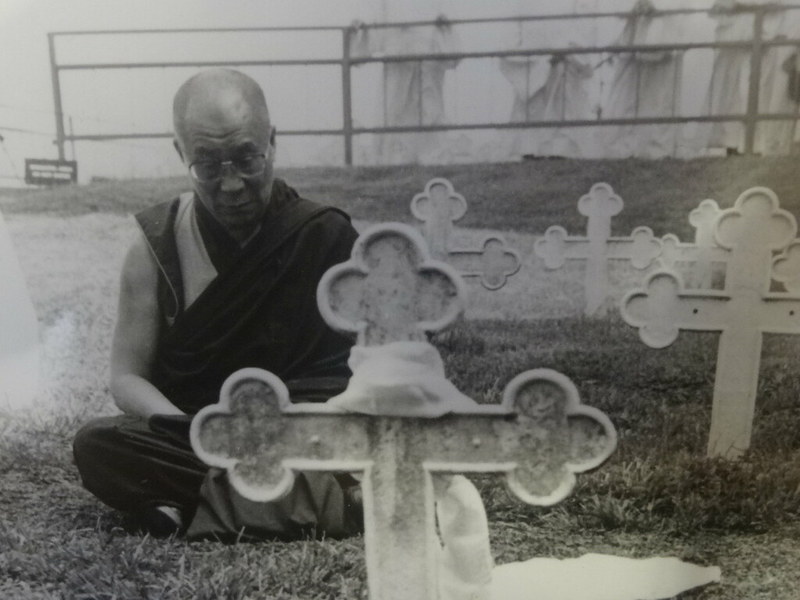
Merton corresponded with Rabbi Abraham Joshua Heschel (1907-1972), who was a friend of Dr. King and who frequently marched with him (see photo below). Aside from civil rights issues and the war in Vietnam, Merton and Heschel discussed the Second Vatican Council's (Vatican II) statement on nonviolence and peace, as well as about improving interfaith relations. Merton even corresponded with Ethel Kennedy, Robert Kennedy's wife, ostensibly to better understand Bobby's and President Kennedy's views about nuclear armament, the Cold War, civil rights, and the war in Vietnam. Merton sent his condolences to Ethel Kennedy after the assassinations of both John and Bobby, and Ethel sent a letter of condolence to the monstery after Merton's death. Coretta Scott King similarly sent a letter to the monastery. In his "Cold War Letters," Merton prophesied the assassination of President Kennedy for his peace-making policies in opposition to the advice of his war-mongering military and CIA advisors who pressured him to launch a preemptive nuclear attack against the Soviet Union. President Kennedy formed the Peace Corps in March 1961, around the same time as the CIA's failed invasion of Cuba, which came to be known as the Bay of Pigs, and sixteen months before the Cuban Missile Crisis. Merton's last book, Faith and Violence (1968), published months before his death, was extremely critical of America’s war in Southeast Asia, especially of the Johnson Administration. In November 1968, weeks before his mysterious death, Merton met with a then-young Dalai Lama in Dharmsala, India where the Dalai Lama lived in exile (see photo below). Merton increasingly wrote about environmentalism. In fact, he wrote to Rachel Carson in 1962 in support of her pioneering book, Silent Spring, at a time when others were criticizing it. Merton was close friends with John Howard Griffin, who wrote about racial inequality early on during the Civil Rights Movement and is best known for his controversial sociological project to pass as a Black man in the Deep South in 1959 and for his subsequent book about his experiences, Black Like Me (1961). After Merton's death, Griffin became Merton's biographer. Throughout the 1960s, American poets like Wendell Berry, Joan Baez, and Denise Levertov visited Merton at the monastery (see photo below). Decades later, Levertov wrote a foreword (see at top of page) to John Smelcer's poetry book, Songs from an Outcast (UCLA, 2000).
On August 9, 1943, Austrian farmer and converted Catholic conscientious objector Franz Jägerstätter was executed by the Nazis for adhering to his Christian belief that he should not kill others for Hitler and his unjust and immoral war. From prison, he wrote whether it is right and just to kill others because your government declares it is right and just to do so in contradiction to higher laws. The story of Jägerstätter's moral courage would have been forgotten if it weren't for the efforts of American sociologist, Gordon Zahn, who published a book about him (In Solitary Witness, 1966) and his friend, Thomas Merton, who included a chapter about Franz Jägerstätter in Faith and Violence. Together, Zahn and Merton emboldened Pope Benedict XVI to declare Jägerstätter a martyr and beatified him in 2007—a step toward sainthood. President Kennedy once remarked of individuals like Franz Jägerstätter: "War will exist until the distant day when the conscientious objector enjoys the same reputation and prestige that the warrior does today." For the past few years, John Smelcer has been writing a novel inspired by Franz Jägerstätter. Jägerstätter's only surviving daughter collaborated with him on the project.
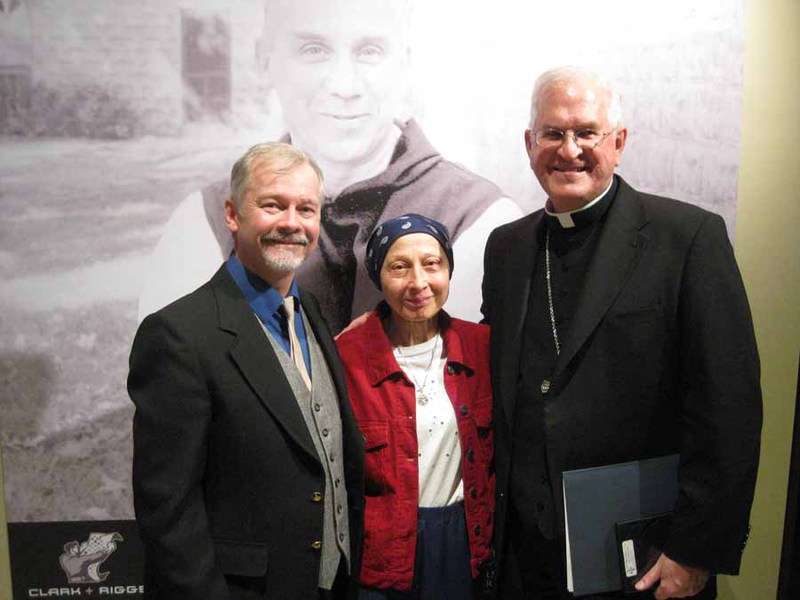
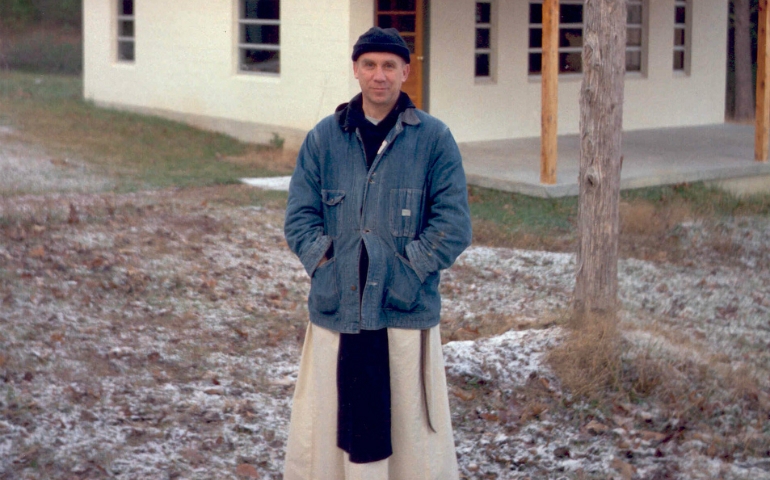
John Smelcer’s discovery was a treasure trove of Mertonalia. While numerous archives such as at Columbia University hold letters, notes, book drafts, etc., few of Merton’s personal belongings were known previously to exist. Merton was, after all, a Trappist monk, and therefore poor of earthly possessions by choice. The trove included all the clothing Merton was wearing in photographs from the last years of his life: photos of him in his white monk’s cowl and black hooded scapular (worn in the photo with the Dalai Lama below); photos of him in his iconic denim jackets, shirts, jeans, and sailor cap (see photo below at Frazier Museum). The collection included such sacred objects as his rosary, his flagellant whip, and his personal Trappist Psalter. It also included notes, photos, letters, and audiotapes of him talking. A draft of a poem Merton was working on just a couple of days before he died was found neatly folded and tucked inside a pocket of an article of clothing that was returned along with his body. It is ostensibly his last writing. The objects had been protected by close friends of Merton’s—a fellow brother monk and a nun from a nearby convent. Upon learning of Merton’s death, the Abbot of Gethsemani ordered the fellow monk to collect Merton’s possessions and to get rid of them (he was worried about zealous devotees descending on the monastery in search of Merton relics as souvenirs). Shortly thereafter, and on Merton’s advice, the monk and the nun left their respective religious orders and married a year later. They moved to Louisville, Kentucky for years, and eventually to the Midwest. For almost half a century, the two safeguarded their friend’s belongings. The former monk had been a prisoner in German POW camps during WWII after his B-17 was shot down on his 25th and final mission. He was among hundreds of POWs tortured by the Gestapo during the infamous "Heydekrug Run" to Stalag Luft IV. The monk died in 2009. In her mid-eighties, the former nun worried about what would happen to the collection if she passed away. For years, she had been praying to Thomas Merton to send someone to help her.
And then John Smelcer came along.
One day, an acquaintance casually mentioned to John that he knew of a nun who twenty-five years earlier had told him that she had all this stuff that used to belong to Thomas Merton. Coincidentally, at the time, John was writing The Gospel of Simon, the first-person account of Simon of Cyrene, the man who the Bible says was compelled by Roman soldiers to help Jesus carry his cross. The interfaith story of Jesus's gospel of love, compassion, and mercy--at once faithful yet at times daring and thoroughly modern--was inspired in part by Thomas Merton, known to fellow monks and friends as Father Louie. Written over twenty years, the book is dedicated to Thomas Merton, Martin Luther King, Jr., and Pope Francis, who was inspired by Merton as a young priest. Recognizing the significance that if what the friend said was true and if the nun still had the collection, it wasn't long before John was standing at the nun's doorstep--the beginning of a wonderful and enduring friendship. Despite that the nun was fighting cancer and in spite of the urging by some Catholic clergy to destroy the collection, the two worked together over the next few years to donate every object to museums, including the Thomas Merton Center at Bellarmine University, The Vatican, and the Smithsonian's Museum of American History. During those years, Dr. Smelcer interviewed her dozens of times in her home and at his to collect her remarkable stories. Sadly, in her 90s, the nun passed away in mid-January, 2022 just as the advance review copies of the book were published. Click here to watch a brief video of Helen Marie talking about her mentor and friend, Thomas Merton.
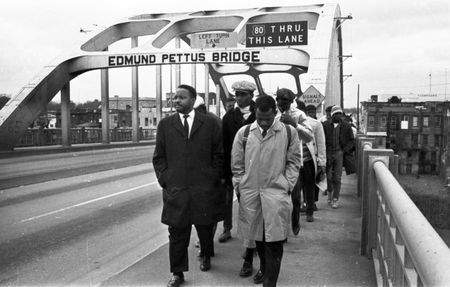
In his later writings, especially during the tumultuous 1960s, Merton insisted that prayer and the religious life had to be equal to taking action to alleviate suffering, injustice, and inequality. After studying earlier religious writers like Meister Eckhart, Dietrich Bonhoeffer (the German pastor executed in 1945 for his failed attempt to overthrow the Nazi regime in July of 1944), and his friend Jacques Maritain who visited Merton at his hermitage in 1966, Merton increasingly came to understand that compassion means justice and justice requires action, not just empty prayer. The author of Ghandi on Non-Violence (1965), Merton helped inform Martin Luther King, Jr.’s practice of non-violent protest that was the hallmark of the Civil Rights Movement. Indeed, the two had planned a weeklong spiritual retreat at Merton’s hermitage near Bardstown, Kentucky, but King was assassinated weeks before the scheduled event. Thomas Merton and Coretta Scott King corresponded about the tragedy. When a young John Lewis crossed the Edmund Pettus Bridge on March 7, 1965 on what later became known as "Bloody Sunday," he carried a backpack containing an orange, an apple, a toothbrush, and Thomas Merton's autobiography, The Seven Storey Mountain (see photo below). In 1987, John Lewis was elected to the U.S. Congress, where he served until his death in July of 2020. During his decades of service to his country, John Lewis was hailed as the "Conscience of Congress." Thomas Merton died under mysterious circumstance while attending a conference on monasticism outside Bangkok, Thailand eight months after Martin Luther King, Jr.'s assassination. and twenty-seven years to the day after he entered the monastery as a postulant. All three men exemplified the Christian obligation to seek peace, relieve suffering, and correct injustice.
Contrary to some specious thinking, Merton was not an outcast among Catholics. Indeed, Pope John XXIII and Pope Paul VI both considered Merton to be the greatest living Christian writer and both sent him gifts to demonstrate their affection. Pope John XXIII was inspired by Merton in writing his November 1963 encyclical Peace on Earth (Pacem in Terris), in which he wrote that the Christian must be a peacemaker. Pope John Paul II often quoted Merton in his homilies, and Pope Francis said that Merton inspired him as a young priest. In his address to the U. S. Congress on September 24, 2015, Pope Francis praised Thomas Merton and Martin Luther King Jr. as being among the greatest Americans, alongside Dorothy Day and Abraham Lincoln. Pope Francis said, "Merton was above all a man of prayer, a thinker who challenged the certitudes of his time and opened new horizons for souls and for the Church. He was also a man of dialogue, a promoter of peace between peoples and religions.” The Dalai Lama was once asked to name the three people who most influenced him. Along with his personal Dharma teacher, he named Thomas Merton. It was with a glad heart that John Smelcer wrote to the Dalai Lama and Thich Nhat Hanh to share news of his discovery of Merton's worldly possessions. Both thanked him for the glad tidings.
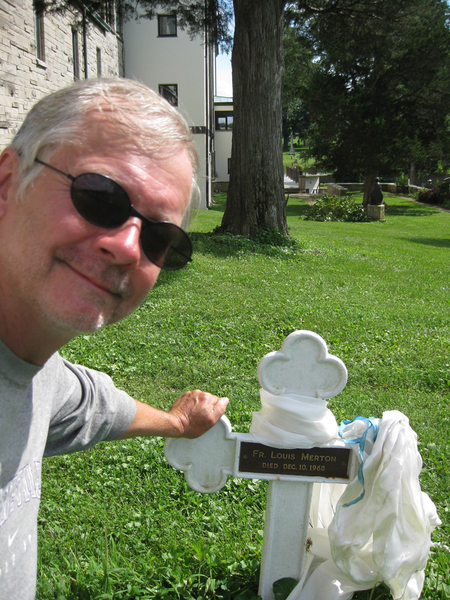
From everything he learned since his "discovery" in 2015, Dr. Smelcer urged Pope Francis to declare Thomas Merton a martyr. Although he feels he is unworthy and undeserving of his role in preserving Thomas Merton's legacy, Dr. Smelcer's book about the experience and the unexpected spiritual journey, Enacting Love, was published in the summer of 2022 (click on "books" to order on amazon.) Several of Merton's old friends helped him along the way. If you care about love, compassion, mercy, peace, non-violence, Civil Rights, tolerance, inequality read this book.






In the early-to-mid 1990s, Dr. Smelcer was co-chair of Alaska Native Studies and assistant professor of English and Education at the University of Alaska Anchorage. He served as an outside reader on a PhD dissertation committee on the history of American Indian education at Harvard University, as well on numerous committees to increase diversity in the faculty. He was faculty advisor for the Alaska Native Student's Association. In the mid-to-late 1990s, Dr. Smelcer was executive director of the Ahtna Heritage Foundation, whose mission is to preserve the Ahtna language and culture and to administer the tribe's college scholarship program. He was also a tribal archaeologist. For many years, Ahtna elders from every village taught John everything they knew about the language, mythology, and customs until John became the living repository of the cumulative knoweldge of Ahtna. Nowadays, Dr. Smelcer is among the last speakers of Ahtna, one of the most severely endangered languages on earth. In 1998, his tribe published a dictionary of the language he had edited (click on "dictionaries"). That same year, Dr. Smelcer was nominated for the Alaska Governor's Award for his contributions to the preservation of Alaska Native languages and cultures. At a ceremony in 1999, Ahtna Chief Harry Johns designated John Smelcer a Traditional Ahtna Culturer Bearer. John teaches Ahtna in an innovative YouTube series called "Ahtna 101" (see below). As the only tribal member who is able to read and write in Ahtna, John sometimes writes poems in Ahtna. The poems he writes and publishes stand as the only literature written in the Ahtna language in existence. His The Complete Ahtna Poems, includes forewords by Noam Chomsky and Steven Pinker.
Throughout most of the 1980s and early 1990s, John used to drive down to Kenai to dipnet salmon and to visit fellow Alaska Native ethnographer and elder, Peter Kalifornsky, who won the American Book Award for his book of Dena'ina ethnographic narratives, Dena'ina Sukdu. Peter and John often talked about their endangered Native languages and about the projects they were both working on. Peter died in 1993 at the age of 82. During the same years, John used to visit Chief Peter John whenever he went pike fishing or duck hunting in Minto Flats near the Village of Minto. They would discuss their efforts to preserve their languages. Chief John, who died in 2003, used to lament: "I give the young people lots of chance to learn what I know so it won't be lost forever. But none of them take me up on the offer. Nobody wants to learn about the old ways, like our language. That's why I stop trying to pass it on to the young people. Everything I know is going to die with me." One of John Smelcer's greatest fears is that everything he knows will die with him.
For years, Dr. Smelcer delivered an annual lecture in linguistics at Binghamton University about Alaska Native languages and especially about Ahtna. The lecture hall was always packed with students and faculty. Despite all these facts, some non-Natives--including highly educated university professors and established ethnic writers--ridicule John for speaking, writing, and teaching his severely endangered Native language. One famous African American writer named Marlon James openly mocked John saying that his Native language "sounded like gibberish to him," akin to the way colonizers degraded other languages as being inferior or primitive--including African languages--by calling them gobbledygook. How is that African American writer's work representative of the experience of the "Other" in American literature when he ridicules and degrades a writer of a different American ethnicity who is faithfully and tirelessly trying to produce literature in the severely endangered language of a people who lived on the continent for thousands of years before his African ancestors ever arrived in the dark holds of ships?
Dr. Smelcer also speaks Alutiiq, a neighboring, yet unrelated Alaska Native language, and published a dictionary of it as well. For almost five years, Dr. Smelcer was director of that tribe's Culture and Language Preservation Project. One of the projects completed during those years was The Day That Cries Forever, a book in which every living survivor of the biggest tsunami in history gives their account of what happened that fateful day in March of 1964 when their seaside village was swept off the face of the earth. Former governor of Alaska, Jay Hammond, said of the book: "the history of Alaska was incomplete until this book." Dr. Smelcer also edited and published We are the Land, We are the Sea, an anthology of stories by the people of Chenega on their subsistence relationship to the land and sea, a subsistence lifestyle that was severely impacted by the Exxon Valdez oil spill in Prince William Sound in 1989. As a college student back then, John worked on a crew to clean the beaches and wildlife of oil.
John Smelcer has published dozens of books on Alaska Native history, oral history, languages, and mythology. In 2009, John Smelcer delivered the Convocation Address at Baruch College in New York City after Sherman Alexie, who was originally invited to deliver the address, was unable to attend. In 2012, Dr. Smelcer delivered the keynote address at the FBI's New York City field office during National Native American Heritage Month (November) as part of President Obama's initiative to increase diversity awareness among government agencies. In 2013, friends across the nation recommended John Smelcer to the White House to receive the Presidential Citizen's Medal for his enduring efforts to preserve America's Native heritage.
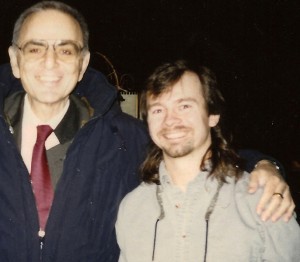
John Smelcer had conversations about science and religion with his friend, Pulitzer, Emmy, and Peabody Award winning scientist, Carl Sagan (photo: Carl Sagan and John Smelcer in Anchorage, Alaska, 1996). More than anyone, it was Sagan who convinced NASA to turn around the camera on Voyager when it was four billion miles from home and take a picture of Earth. The iconic image of our planet as a pale blue dot no larger than a single pixel in a shaft of sunlight shows just how small, fragile and unique our planet really is. Following his late friend's example, John often writes about having compassion for our planet.

“Look again at that dot. That’s here. That’s home. That’s us. On it everyone you love, everyone you know, everyone you ever heard of, every human being who ever was, lived out their lives. The aggregate of our joy and suffering, thousands of confident religions, ideologies, and economic doctrines, every hunter and forager, every hero and coward, every creator and destroyer of civilization, every king and peasant, every young couple in love, every mother and father, hopeful child, inventor and explorer, every teacher of morals, every corrupt politician, every superstar, every supreme leader, every saint and sinner in the history of our species lived there—on a mote of dust suspended in a sunbeam.” -Carl Sagan, Pale Blue Dot
After publishing The Gospel of Simon in 2016, John Smelcer was invited to write a blog for The Charter for Compassion, the world's largest and most comprehensive compassionate movement with some 8.5 million "members" in 45 countries. The Charter promotes compassion, tolerance, nonviolence, peace, interfaith discourse, social justice, and environmental stewardship. Founded by Karen Armstrong (A History of God) after she received the $100,000 TED Award in 2008, the award winning website garners some 40-55 million visits a year. (Click on the icon below to go to John Smelcer’s blog page.) From 2016-2020 Dr. Smelcer was the inaugural Writer-in-Residence for the Charter for Compassion, where every April during National Poetry Month, he teaches a popular global online course entitled Poetry for Inspiration and Well-Being, which sometimes enrolls hundreds of students from around the world. In celebration of the tenth anniversary of the Charter, John wrote a special poem (below), which was shared by the Charter with millions of people around the world.
If I have learned anything from my nearly seven decades of living on earth and from my tenacious, persistent, and judicious studies of society, linguistics, humanities, history, and philosophy and religion over nearly half a century at some of the world's greatest universities, and from personal friendships with some of the world's greatest religious and spiritual intellectuals, it is this:
People ask me all the time what is the secret to knowing God and to living a mindful and compassionate life that is more Jesus-like, of making a Heaven on Earth. My answer is simple but so allusive to most people: "If you want to know God, love everything and everyone all the time and all at once."
Millions of Americans attend church every Sunday morning. For the most part, they hear sermons about Jesus’s two thousand year old message of love, kindness, charity, forgiveness, mercy, and non-violence. They hear how Jesus said “those who live by the sword perish by the sword”, “Love thy enemies,” and "Turn the other cheek." They hear uplifting sermons about “The Prodigal Son,” “The Good Samaritan,” and the story of how Simon of Cyrene helped to carry Jesus’s burden—stories that teach us how to be better people. But in some churches, the preacher’s or priest’s thunderous sermon is vitriolic, inciting hatred, divisiveness, suspicion and aggression toward others, and ultimately violence. They tell congregants to be "Soldiers for Christ." Despite the lyrics of the popular church hymn, there is no and there can never be such a thing as soldiers for Christ, for war and soldiering is incompatible with the messages of Jesus. With mouths foaming, somepreachers even call for civil war--the murdering of fellow Americans. One popular TV evangelist recently called for the murder of all non-Christians. He has forgotten the proverb to "live and let live." He has forgotten that Jesus resisted the temptation of political power when tempted in the desert. He wanted nothing to do with it. Too many preachers are out of touch with reality from consuming too much right-wing media, too much hatred. They are lying to you. They are false prophets. The truth is, they only want power, influence, and wealth for themselves. They violate the commandment not to use the Lord’s name in vain, which, contrary to layman thinking does not mean saying cuss words. God doesn't care about cuss words. They are just words carried on the wind for an instant and then nothing. Taking the Lord’s name in vain means to use God’s or Jesus’s name for one’s own vanity or ego in order to influence others to do what they want them to do by saying it is actually for God. "God came to me in a vision and commanded that you give me money!" they proclaim from the pulpit and on television. Why do you think we say, “You’re so vain” to those who are narcissistic and self-centered? Vanity is about benefiting oneself.
Fearmongering preachers such as they make idols of our fear, and our fear becomes our God. Any preacher who weaponizes religion to incite hatred, divisiveness, prejudice, and violence instead of proclaiming Jesus’s message of understanding, tolerance, unity, mercy, forgiveness, love, compassion, and peace is violating the sanctity of the pulpit. They are not Children of God. They are not ambassadors of Jesus. They are not Vicars of Christ. They do not know the Word of God, for the words never made their way into their callous and power-hungry hearts. They have no business standing in the pulpit. Instead, they should be working in a politician’s election campaign office selling baseball caps, yard signs, and bumper stickers. If you are a member of a church like the ones described above, it’s time to find another church with a pastor who espouses Jesus’s true messages. Tell them you left because you wanted to live by Jesus’s example of love, not hate. Tell them you want to embrace your neighbor, not harm them. Tell them there’s already enough hatred in the world. Remind those wrong-minded clergy that Jesus said the most important thing is that his “followers will be recognized by their love for one another.”
The ignorance of Christians who say they want to take up arms and be "Soldiers for Christ" is astonishing! If you believe that God is almighty and can do anything with the snap of a finger--create the universe and our world, create all life, including humans, and can flood the entire world--then God could snap His finger and make his perceived enemies vanish off the face of the earth. God doesn't need you to stand up or fight for Him. Nothing we do injures His ego. Such violence-minded Christians only want power and control for themselves. One of the oldest truisms in all of humanity is the maxim, "Power corrupts. Absolute power corrupts absolutely." Even the most religious are corrupted by power. It always happens. Don't fool yourself.
This needs to be said: God doesn't love America more than any other country. God loves every single human being regardless of the nation they call home. To God, there are no boundaries, only people. You can be proud of your country without falsely believing that God or Jesus loves your country more than any other country. Hugging a flag or displaying a flag does not make one a patriot. Such thinking always leads to hate and violence.
Despite the attempts of so many who zealously believe they can force their religious beliefs or opinions on others by bludgeoning them with the Bible or with scripture, you can never force another person to love God or Jesus through intimidation, violence, or imposition, for even God cannot make someone love Him. That is the one power even God does not possess. Even at gunpoint, there is no way to measure love in another person's mind or heart. Love can only be freely given. The hearts of anyone who believes otherwise are as empty of God or Christ as rain in the desert. You do not know what God wants. God's Will and Mystery are beyond all understanding, contrary to whatever you have been told. God loves every person. God loves every nation. God even loves your enemies. Stop hating and oppressing others in the name of God.
You say you are a patriot who loves our nation's founding principles? Then stop denying other people their rights. The Declaration of Independence famously states that we are all "endowed with certain unalienable rights, that among these are Life, Liberty, and the pursuit of Happiness." You resent anyone who tries to deprive you of your pursuit of Happiness; why do you endeavor to deprive others of their Happiness? What makes you happy may not be the same as what makes others happy.
So much of the hate and divisiveness and intolerance in the world today is because of the fear of change. Too many people want things to stay the same or to be the way they used to be. But the past is not what they think it was. Their romanticized notion of the past is erroneous. It was never the way they think it was. Everything changes. Nothing stays the same. Even stars one day burn out and die. Our own sun will eventually engulf our planet. Galaxies collide. Change is the only constant in the universe. It is inevitable. Consider the history of movie videos. First came the LaserDisc (like a vinyl record), followed by VHS tapes, then DVDs, BlueRay, and now streaming video. Who owns a cassette or 8-Track player nowadays? The only place you find the previous versions are at garage sales and thrift stores. Do you recall how people used whale oil to light their homes until whales almost became extinct. Luckily, the electric lightbulb came along. Have you ever heard anyone complain that we no longer slaughter whales for light? Consider, too, the automobile that went from steam engine, to fossil fuel-powered, to electric. So too did trains. To all those who resist replacing fossil fuel energy with clean energy: consider that it is a fact that oil reserves are being depleted around the world, and yet the sun that has been shining for billions of years, will keep shining for billions more, providing free and clean energy to the world. The world didn't end because things changed. It is one of humanity's greatest failures and absurdities that so many people are fearful of change and would enact violence on others in a desperate and futile attempt to resist it.
Stop believing you know the truth or that your group alone has the truth. When I was a boy, astronomers believed the universe was around 10 billion years old. Over the decades, based on science and observation, they adjusted the age to 13.8 billion years. In 2023, the James Webb Space Telescope spotted the oldest and most-distant object in the universe. Accordingly, astronomers have increased the predicted age of the universe by billions years. The point is only fools believe they know everything. In fact, there’s a name for this paradox. The “Dunning-Kruger Effect” says that the less intelligent a person is, the more they think they know everything, while a highly intelligent person realizes that the more they know the more they don’t know. The wise person says, “I don’t know” while the idiot foolishly declares, “I alone have the truth. I know everything.” My old friend and famed scientist, Carl Sagan, used to tell me that the most important thing a person can say is, "I don't know." The great theoretical physicist, Richard Feynman, said the same thing.
Armed with seven university degrees, including PhDs, I realize how little I know of anything. Every door I ever opened in my pursuit of knowledge, lead to many more unopened doors and more questions. I am reminded of how people used to think the earth was flat and that it was the center of the universe. Folks believed absolutely that they knew the truth. Anyone who questioned "the truth" was outcast, banished, imprisoned, and tortured (or worse). Consider what happened to Galileo. But despite their fervent beliefs, the world was always round and it was never the center of the universe. If you want the world to be a better place, stop trying to impose your beliefs on others. You do not possess the truth of anything no matter how much you believe otherwise. Those who insist they know are afraid of what they do not know, and their fear gives rise to violence.
Almost 2,400 years ago, in The Republic, the ancient Greek philosopher, Plato, understood humanity's ignorance. He said that most everyone is ignorant, and that they are so stubborn and so comfortable in their ignorance, that they will violently resist hearing the truth. We see that even today. All you have to do is look around you.
Complimenting Plato and the "Dunning-Kruger Effect" the German pastor and philosopher, Dietrich Bonhoeffer, came up with his “Theory of Stupidity” that says that too many people allow themselves to be rendered stupid by media and by charismatic political or religious figures who influence people to behave in the most malicious ways. Hitler had Bonhoeffer executed in 1945 for his public stance against Germany’s wholesale slaughter of fellow human beings during WWII. Bonhoeffer wrote that when society becomes corrupt, crooked, cowardly, and criminal—as were the Nazis and their followers—their stupidity is more dangerous than pure malice, for such people cannot be reasoned with. Reason falls on deaf ears. Truth is simply brushed aside as being unimportant, irrelevant, and inconsequential. Stop listening to anyone who makes you feel angry, fearful, distrustful, or to contemplate violence in the name of religion or politics. They are deceiving you for votes, clicks, profit, or power.
So much of the hate in America stems from a false narrative of America's past, one that never happened. Hundreds of Nazis recently took to the Mall in DC marching with signs that stated, "Reclaim America!" In their minds, at some point in the past America was all White, Christian, and English was the only language spoken. But the fact is America was never all White and English was never the only language spoken, not even for a single second of its history. At the moment Columbus "discovered" America, there were an estimated 100-120 million indigenous people living in the Americas, speaking thousands of languages, and holding countless different religious beliefs and practices. All across the Americas were cities to rival those in Europe at the time (to learn more Google: Tenochtitlan in Mexico and Cahokia near modern-day St. Louis). It is a fact that none of the 89 men who sailed with Columbus on the three ships spoke English. They all spoke Spanish and Portuguese. (You could almost say that Spanish was the original European language in the Americas.) Within the first years after Jamestown was established, Africans were enslaved and shipped to America. They too spoke many different languages and held diverse religious beliefs. Truth be told, America was never White, never English only, never only Christian. From the beginning, America has been a "melting pot" of diversity. It is part of our country's DNA. There is no past to reclaim.
Albert Einstein, who escaped Hitler’s gas chambers and ovens, knew this to be true when he wrote: “The greatest obstacle to world peace is that monstrously exaggerated spirit of nationalism, which also goes by the fair-sounding name of patriotism. It seriously threatens the survival of civilization and our very existence. Only by overcoming our national egotism will we be able to contribute towards improving the lot of humanity.” Famed British writer, H.G. Wells (War of the Worlds, The Time Machine), once wrote: "Our true nationality is mankind."
Speaking of Adolf Hitler . . . as a warning against violence and politics and nationalism, consider how more than 100 million people were killed in WWII all because of one small, selfish, egotistical, and cowardly man. Adolf Hitler’s hatred of “others” included people of color, people of different faiths, and those who were mentally or physically challenged, and anyone who disagreed with him. His slogan was “Make Germany Great Again!” But at the end of the war, with Europe and Germany in ruins and with Berlin surrounded by his enemies, Hitler got on the radio and told his defeated nation that they had failed him. Though Germany was utterly destroyed and millions of Germans were dead, Hitler proclaimed that the loss of the war was the fault of German citizens, not his. He said they weren’t strong enough or committed enough or violent enough to achieve his vision. At the end of his last radio broadcast, Hitler said that because of their failure, no Germans should be left on earth. If he failed, he wanted to take every last German with him. Within a day or two, Hitler committed suicide in a bunker like the selfish and frightened coward he was to avoid punishment for his crimes against humanity and the extermination of over seven million Jewish people. If history is our guide, we must ask ourselves if we see parallels in America today in another selfish, egotistical, and racist political leader who courted the religious right to secure their blind allegiance to enact violence in his name in an attempt to implement his nationalistic policy of hate, racism, and discrimination in order to establish “White Power,” or more accurately “White Supremacy."
As an anthropologist and archaeologist, let me just say that White people are not the pinacle of evolution. There is no progression of evolution leading towards something superior to other species. It is not like a cell phone or computer getting faster and slimmer with every new version. All species struggle to exist in their immediate environment. All species exist because they have adapted to exist in their environment. Over time, environments change. Everything changes. Just as no dog species is superior to others, or cats, or mouse, or fish, or bumble bee, no human group is superior to any other. It is the fallacy of the ignorant and zenophobic to believe otherwise.
I am constantly astounded by the number of people who lack decency and compassion. Take for instance, Russia's unprovoked war on Ukraine. So many people tell me they could care less about the citizens of Ukraine who endure the death of thousands of their neighbors and family and the total destruction of villages, towns and cities at the hands of Russia. These folks tell me things like, "But Ukraine used to be part of Russia. Putin just wants to take back what was once Russia's." My response is simple: Historically, great swaths of America belonged to England, Spain, France, Mexico, and even Russia (Alaska). How would we Americans feel if any of those nations attacked our country in an attempt to take back portions of America that they once controlled? Would those same folks stand by and say it's okay for those countries to wage war against us, kill our citizens, and destroy our cities? As an Alaskan, I can tell you that Alaskans would fight any attempt by Russia to take back our state. Folks who support Russia's malevolence are the same kind of cowards who stood by and watched as Nazis burned the world to the ground in WWII. Even as Putin says, "You were part of us once, and I want you to be part of us again," he blows everything and everyone in Ukraine to hell and threatens nuclear anhilation." By all doctrines of war--even by the most ancient like the Chinese philosopher, Sun Tzu, Russia has already lost the war.
I should like to point out that in the immediate months after Russia's invasion of Ukraine, I reached out to the Pentagon and the Ukrainian Embassy in Washington DC to volunteer to serve (to my wife's chagrin). At almost 60 years old, and with 40 years since I received an Honorable Discharge from the Army, they told me I was too old and I had no useful skills. But I had to try. I couldn't live with myself if I didn't try to help. I've always stood up to bullies, even when they were bigger than me or in a gang. (As a teen, I once fought a gang of five boys who were all my age. I won.) I understand how evil flourishes when people of good conscience stand by and do nothing. It was probably a blessing in disguise. That fall, I was diagnosed with cancer and spent the next year in chemotherapy treatment and recovery. By the end of treatment, my body was wasted, but not my spirit. Little by little, I rebuilt what cancer took from me.
I remember when winning at any cost was a bad thing, a personal trait to shun. "Cheaters never prosper" and "It's not about winning, but about how you play the game" was a common saying to instill sportsmanship and honesty. There was no dishonor in coming in second or third. Some of the greatest stories in history are of men and women who did not win, but gave it their all or showed real sportsmanship, courage, and honor on the field. But nowadays, some people think that winning at any cost is all that matters. How you win--cheating or otherwise--is fine with them as long as their team wins. The means don't matter. Nowadays, lying and cheating has become a virtue. Some people idolize liars and cheaters, especially politicians. Who and what will we be as a society in the future with such a gross mindset?
On Racism: I have a long-time friend who insists that he is not racist. Yet, he is the most most racist person I have ever known. Many years ago, I called him out on something he said about Black people. He yelled. He cried and gnashed his teeth. "I am not racist!" he pleaded. In my experience living through seven decades on this earth, those who are the most racist always insist they are not. One morning at church, the preacher was saying a prayer for the safety of our soldiers going over to Iraq and Afghanistan. That same friend leaned over and whispered in my ear, "We should just nuke all of them Ragheads." Without hesitation, I replied, "You mean all those human beings?" As you might imagine, I no longer communicate with that friend. Racism is the ugliest and most unredeeming of human traits. It is the root cause of marginalization, oppression, and violence. There is no "We." There is no "They." There is only people.
John Smelcer currently serves on the board of directors for a nonprofit that provides transitional housing and support for recovering addicts in NE Missouri. For the most part, he acts as a handiman, repairing and maintaining the residential house. Before that he recently served as vice president of the board of directors of a pay-what-you-can nonprofit cafe that is part of One World Everybody Eats (OWEE), a national movement of over 60 cafes in towns and cities across America that work to alleviate hunger and promote health and food education, local and organic foods (Farm to Table), and sustainability. The James Beard Awards named OWEE its Humanitarian of the Year in 2017. Sadly, like thousands of other restaurants, the cafe closed during the pandemic. In the years before that, Dr. Smelcer served on the board of directors for the regional United Way. John was a candidate to be an official National Elector Delegate for the State of Missouri in the 2020 U.S. Presidential Election.
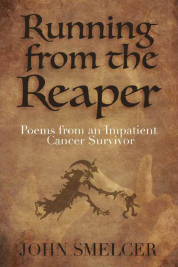
In the fall of 2022, Dr. Smelcer was diagnosed with high grade stage 2 B-cell non-specific, non-Hodgkins Lymphoma, a rare blood cancer in which B cells mutate and proliferate to the point they build up tumors. In John's case, the tumor grew in his left armpit, impinging his ulnar nerve. The fast-growing cancer can spread throughout the body. Doctors said John would be dead in three months if he didn't start treament immediately. Wisely, John completed his chemo and immunotherapy protocol. (Photo below of John Smelcer ringing the bell after completing his cancer treatment at Ellis Fischel Cancer Center, MU Health, Columbia, MO, February 6, 2023) A follow-up PET scan in late March revealed that the cancer had not returned. After more than half a year of writing about his cancer experience, John's poems were published in Running from the Reaper: Poems from an Impatient Cancer Survivor (April 2023, click on bookcover below to go to Amazon). Poems from the collection have appeared in cancer magazines across the nation, including in Conquer (April 2023). Today, Dr. Smelcer is a contributing writer at Cure magazine (also called Cure Today), America's highest circulated magazine expressly about cancer for cancer patients, survivors, family, and caregivers. While roughly a million people read each issue of the magazine, the official website receives another twelve million views a year.



Click on the Charter for Compassion logo (above) to learn more about Dr. Smelcer's popular online course in poetry.
Click on "bio" to learn more about John Smelcer's remarkable life.
Click on "ethnicity" to learn about John Smelcer's Alaska Native heritage.
Click on "dictionaries" to download Dr. Smelcer's Ahtna and Alutiiq noun dictionaries, as well as educational posters of both languages, and a bilingual children's picture book in Ahtna and English.
Back around 2016, an NPR radio host interviewing Dr. Smelcer about the loss of indigneous languages globally (see photo below), asked if he used technology like YouTube to archive and post his linguistic preservation work, thereby making it more accessible. Since then, Dr. Smelcer has been teaching his severely endangered Alaska Native language on a YouTube channel called "Ahtna 101." To date, there are over 110 episodes. Click on the first icon below to watch episodes.
Beginning in the fall of 2023, Dr. Smelcer created a new YouTube channel in which he retells traditional myths from his tribe. Click on the bottom YouTube icon below to watch episodes of "Ahtna Myths."



sitemap verification more Info
Copyright 2009-2017 - John Smelcer Official Web Site
 Print
Print 